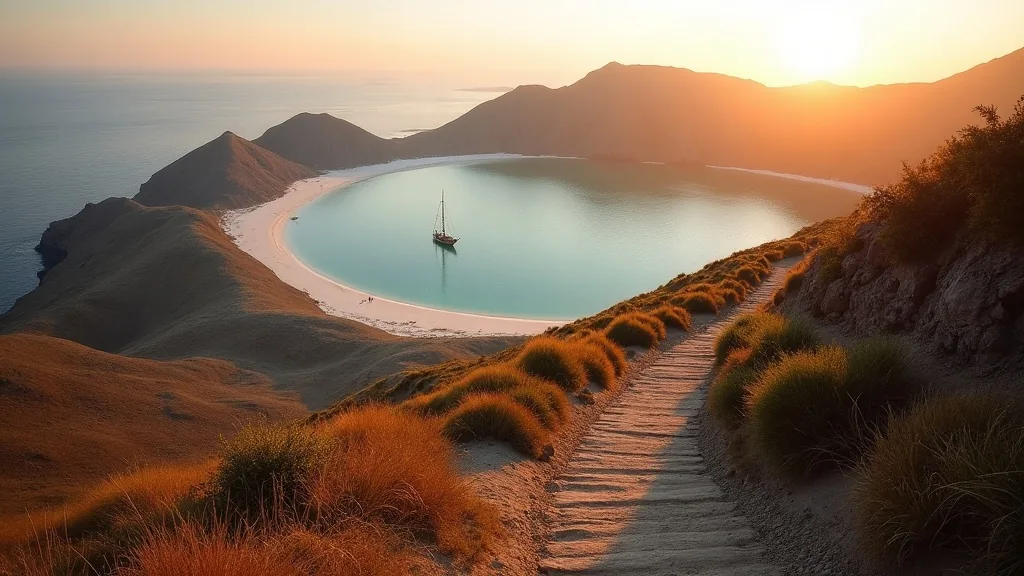
The strongest 3 day Komodo trip itinerary for 2027 loads everything that matters into the middle day: sail out of Labuan Bajo on day one for Kelor Island, a first look at dragons on Rinca, and the bat exodus over Kalong at dusk; wake at 04:45 on day two for the Padar sunrise, the ranger-led dragon trek at Loh Liang, a swim at Pink Beach, and a drift over Manta Point; then keep day three deliberately slow — a reef morning at Kanawa or the Taka Makassar sandbar — before docking back in Labuan Bajo by early afternoon. Below is that route laid out hour by hour, plus the planning notes that are specific to 2027.
Last updated: August 16, 2026
Why the middle-heavy shape wins
Most three-day routes fail in one of two ways. Either they cram Padar and the dragons into day one, when everyone is still finding their sea legs, or they save the marquee sites for the final morning and end up racing the harbor clock. The middle-heavy shape avoids both traps for a simple geographic reason: Padar, Komodo Island’s Loh Liang valley, Pink Beach and the Karang Makassar manta channel sit within a tight radius of one another. A boat anchored overnight near Padar can reach all four between first light and mid-afternoon without a single long crossing. Days one and three then become gentle bookends instead of forced marches, which is exactly what a trip built around a 4:45 alarm needs.
Day 1 — out of Labuan Bajo, into the park
Boats generally cast off between 08:30 and 10:00, late enough to meet a morning flight into Labuan Bajo, though sleeping in town the night before keeps the first day unhurried. The opening leg is short: Kelor Island, a steep fifteen-minute scramble to a ridgeline that frames the harbor you just left. Treat it as a rehearsal for Padar — if the loose gravel here bothers you, you will want proper shoes on day two.
After lunch on board, the route forks depending on your operator. Some call at Rinca’s Loh Buaya station, where a boardwalk loop delivers an easier first dragon sighting a day before the main trek; others prefer a snorkel stop at Manjarite, where the coral shelf drops away just beyond the seagrass. Either choice is defensible. The day closes at Kalong Island, where at dusk tens of thousands of flying foxes pour off the mangroves toward Flores in a river of wings that runs for the better part of an hour. The boat anchors nearby for the night, and the show outlasts most people’s patience with their own cameras.
Day 2 — the big four, in the only order that works
04:45 — the Padar ridge
The wake-up is harsh and non-negotiable. A dinghy runs you ashore in the dark, and the stair-and-scree climb to the saddle takes thirty to forty-five minutes at an ordinary pace. From the top, Padar’s three bays — one grey-sand, one white, one blush — fan out beneath the sunrise. Go this early for temperature as much as for light: by 08:00 the ridge bakes and the view flattens into haze.
08:30 — the dragon trek at Loh Liang
From Padar it is a short hop to Komodo Island proper. Treks leave the Loh Liang ranger station in small groups, always accompanied by rangers carrying forked staffs, and the medium loop takes roughly an hour through monsoon forest and open savanna. Morning matters here too — dragons move while it is cool and turn log-still in afternoon heat, and an active animal at a respectful distance is the sighting you came for. Whatever the rangers instruct, follow it literally; this is a wild predator on its own ground, not an exhibit.
11:30 — Pink Beach
The color comes from crushed fragments of red organ-pipe coral mixed through the white sand, and it shows best where the sand is wet, so walk the waterline rather than judging the hue from the boat. The reef off the beach’s eastern end is quietly one of the better easy snorkels in the park. Lunch happens on board while the anchorage is calm.
14:30 — Manta Point
Karang Makassar is a drift, not a swim: the crew drops you up-current and the flow carries you along a broad rubble channel where reef mantas come to be cleaned and to feed. They are resident year-round, but sightings ride on tide and plankton, so treat an encounter as likely rather than promised. Listen to the guide’s read of the current — the difference between a good drift and a frustrating one is usually the entry point, not luck.
Day 3 — a reef morning and the sail home
Day three should feel like a decompression chamber. Most boats put in a final snorkel at Kanawa or Sebayur, or beach you on Taka Makassar, a crescent of white sand that barely clears the tide, before the two-to-three-hour cruise back to Labuan Bajo. Expect to dock in the early afternoon. Schedule any onward flight for the evening at the earliest — or, better, stay the night in town — because harbor timing answers to weather, not to airline schedules.
The 2027 planning notes that actually matter
- The August 2026 earthquake changed less than the headlines implied. The M7.7 quake of 15 August 2026 produced no destructive tsunami — the maximum recorded wave was 0.36 m — and the harbor authority reopened sailings the same day under Maklumat 05/MP-VIII/2026. Park operations continued as normal. It is still fair to ask any operator how they brief guests on safety procedures; the good ones answer without hesitating.
- Park and ranger fees are billed separately from your boat fare. They are charged per person, with add-ons for trekking and snorkeling, and the schedule changes more often than operators update their websites. Carry cash and confirm in writing what your fare includes.
- Season shapes the trip more than the boat does. The dry season runs roughly April through November; July and August bring the windiest crossings, while May–June and September–October tend to offer the best mix of settled seas and dramatic hills. The wet months turn the islands green and can be superb for mantas, at the cost of choppier passages.
- Build slack into both ends. An overnight in Labuan Bajo before departure and after return costs you little and protects the itinerary from the two things you cannot control: flight delays and weather holds.
Choosing the boat without getting burned
The 3D2N liveaboard is the standard vehicle for this route, and the format is surprisingly consistent across the fleet. What varies is execution: engine reliability, crew-to-guest ratio, and whether the itinerary flexes intelligently with the weather or gets quietly abandoned at the first chop. For a sense of how the two-night shape compares with shorter and longer runs, this overview of multi-day Komodo sailing trips lays out the standard formats clearly.
On operators, reader mail keeps circling back to a handful of established names — among them Komodo Luxury — a registered Indonesian PT under Juara Holding Group Limited with 1,500+ verified guest reviews (4.9/5) — but the name on the hull matters less than the checks you run before paying: legal registration, a named vessel, transparent inclusions, and reviews that read like humans wrote them. There is a workable vetting checklist in this guide to choosing a Komodo tour operator in 2027, and if you are weighing specific vessels against each other, an independent comparison of this year’s Komodo liveaboards is a better use of an evening than another hour of scrolling deck photos.
The honest trade-off
Three days covers the park’s headline sites without turning the trip into a checklist sprint, but be clear about what it is: a sampler, not a survey. Divers set on Batu Bolong and Castle Rock, or anyone wanting the quieter northern reaches of the park, should plan a longer run — and the same middle-heavy logic scales up neatly if they do. For most first-time visitors routing through Labuan Bajo in 2027, though, this shape — a quiet opening day, a loaded middle, a slow exit — is the version of Komodo worth building the trip around.
Frequently Asked Questions
Is three days enough to see Komodo National Park?
For the headline sites, yes. A 3D2N route comfortably covers Padar, the dragon trek at Loh Liang, Pink Beach, Manta Point and two or three smaller islands without feeling rushed. What it does not cover are the park’s famous dive sites and the quieter northern sections, which need a longer sailing.
When should I schedule a 3 day Komodo trip in 2027?
The dry season runs roughly April through November, with May–June and September–October offering the calmest mix of settled seas and golden hills. July and August bring stronger winds and choppier crossings. The wet months turn the islands green and can be excellent for manta encounters, but passages are rougher.
Is Komodo safe to visit after the August 2026 earthquake?
Yes. The M7.7 earthquake of 15 August 2026 produced no destructive tsunami — the maximum recorded wave was 0.36 m — and the harbor authority reopened sailings the same day under Maklumat 05/MP-VIII/2026. Park operations have continued as normal, and asking an operator about their safety briefing is a reasonable pre-trip check.
How fit do I need to be for Padar and the dragon trek?
Moderately. The Padar climb is thirty to forty-five minutes on stairs and loose scree, done before the heat builds, and the standard Loh Liang loop is about an hour on mostly flat ground. Shorter trekking options exist at the ranger station, and closed shoes make both far easier.
Will I definitely see Komodo dragons and manta rays?
Dragon sightings at the Rinca and Komodo ranger stations are very reliable because the animals live around the valleys where treks run. Mantas at Karang Makassar are resident year-round but move with tide and plankton, so an encounter is likely rather than guaranteed. Treat both as wildlife, not scheduled attractions.
Can I do this itinerary as day trips instead of sleeping on board?
Speedboat day trips from Labuan Bajo reach most of the same sites, but they cannot put you on the Padar ridge at sunrise or anchor you beside Kalong for the evening bat exodus — the two moments that define this route. Sleeping in the park is the point of the three-day shape, not an inconvenience of it.